
When Is a Property Considered ‘Uninhabitable’ for Stamp Duty Land Tax (SDLT)?
Discover when a property qualifies as ‘uninhabitable’ for Stamp Duty Land Tax purposes — and how you could claim a refund on your SDLT overpayment.
3 min read
Introduction
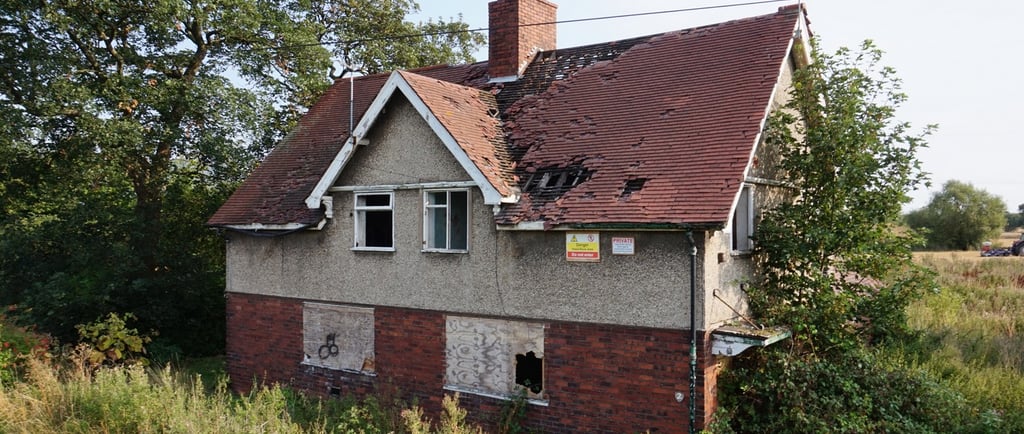
If you purchased an additional residential property in England or Northern Ireland in the past four years and found it needed serious work before anyone could live in it, you may be eligible for a refund of the higher rate Stamp Duty Land Tax (SDLT) surcharge. This is because, under the landmark PN Bewley Ltd v HMRC (2019) case, a property that is not suitable for use as a dwelling at completion may be treated as “non-residential” for SDLT purposes.
In this blog we’ll walk you through exactly what ‘uninhabitable’ means, how it differs from mere renovation, and what you should do next if you believe your property qualifies.
What Does “Uninhabitable” Really Mean?
In simple terms, an “uninhabitable” property is one that, at the time of purchase, lacks the characteristics to be used as a home immediately or will not be useable without substantial works. Legal commentators define it as a building that
cannot be safely or legally occupied, or
lacks essential facilities required for everyday domestic living (kitchen, bathroom, heating, running water)
But it’s important to emphasise: needing normal repairs or modernisation does not automatically mean the property is uninhabitable. The key is whether it was suitable for use as a dwelling at the point of completion. The tribunal in the Bewley case made this central.
What Does “Uninhabitable” Really Mean?
In simple terms, an “uninhabitable” property is one that, at the time of purchase, lacks the characteristics to be used as a home immediately or will not be useable without substantial works. Legal commentators define it as a building that
cannot be safely or legally occupied, or
lacks essential facilities required for everyday domestic living (kitchen, bathroom, heating, running water)
But it’s important to emphasise: needing normal repairs or modernisation does not automatically mean the property is uninhabitable. The key is whether it was suitable for use as a dwelling at the point of completion. The tribunal in the Bewley case made this central.
Key Indicators Your Property May Qualify
Here are practical indicators that your property may have been uninhabitable at the time of purchase:
No functioning heating system, or removed boiler/heating system.
Presence of dangerous materials such as asbestos or other health hazards.
Serious structural issues (subsidence, major wall cracking, absence of roof or major leaks).
No working kitchen or bathroom, insufficient running water or electricity.
Cannot legally be used or occupied in its current state (survey or council tax evidence might show this). UK
If you can document one or more of these at the time of purchase, you may have a strong basis for a refund claim.
Common Mis-Conceptions (and What to Watch Out For)
Modernisation ≠ uninhabitable: Needing new décor, updated kitchen or new windows does not always meet the test.
Mortgageability isn’t the test: A property might be non-mortgageable but still counted as a dwelling for SDLT.
Condition at purchase is key: It is not the future potential but the state of the property at completion that matters.
Expert advice vital: HMRC has issued warnings about mis-classified claims and dubious advisers.
Common Mis-Conceptions (and What to Watch Out For)
Modernisation ≠ uninhabitable: Needing new décor, updated kitchen or new windows does not always meet the test.
Mortgageability isn’t the test: A property might be non-mortgageable but still counted as a dwelling for SDLT.
Condition at purchase is key: It is not the future potential but the state of the property at completion that matters.
Expert advice vital: HMRC has issued warnings about mis-classified claims and dubious advisers.
How We Can Help
At The Stamp Duty Experts, our dedicated team of tax advisers, chartered surveyors, and legal professional specialises in Stamp Duty Land Tax (SDLT) refund claims for properties that were uninhabitable or misclassified at purchase.
We start with a free eligibility review to determine whether your case qualifies for a potential refund.
Next, our team collects and analyses your purchase documents, survey reports, and supporting evidence to build a strong claim.
We then prepare and submit your claim to HMRC, managing all correspondence and technical queries on your behalf — ensuring accuracy, compliance, and efficiency.
Once all required documents are received, the typical turnaround time from submission to receiving your HMRC stamp duty refund is around six weeks.
Ready to Find Out If You Qualify?
If you bought a property in the last four years and believe it might have been uninhabitable at completion, get in touch with our team today.